

Characteristics of PE water supply pipe material
Jan 03,2020

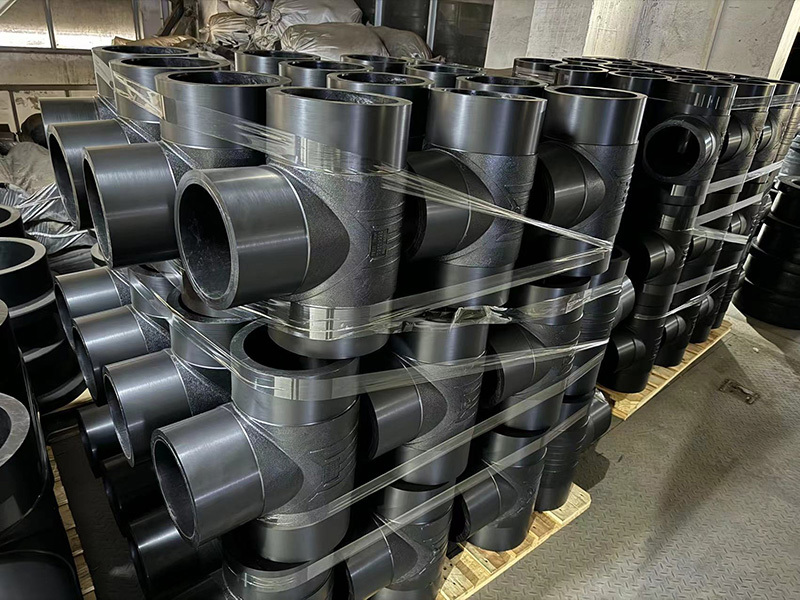
PE water supply pipe material has the characteristics of high strength, corrosion resistance and non-toxic, and is widely used in the field of water supply pipe manufacturing. Because it does not rust, it is an important material to replace ordinary iron water pipes. Now, let Xiaobian take everyone to take a closer look at PE water supply pipe!
What are the characteristics of PE water supply pipe?
Corrosion resistance
Polyethylene has excellent corrosion resistance, good sanitary performance and long service life. Polyethylene is a non-inert material, except for a small amount of strong oxidants, it can withstand a variety of chemical attack, and it is not easy to breed bacteria. It is well known that the reasons for the replacement of steel pipes and cast iron pipes by plastic pipes are not only because plastic pipes have lower energy consumption for water delivery, lower energy consumption for life, lighter weight, less resistance to water flow, simple and rapid installation, low cost, long life, and thermal insulation And so on, because the performance of plastic pipes is better than steel pipes and cast iron pipes because of their corrosion resistance and resistance to microorganisms.
2. Flexibility
Polyethylene has unique flexibility and excellent scratch resistance. The flexibility of polyethylene piping systems has great technical and economic value. The flexibility of polyethylene is an important property, which greatly increases the value of the material for pipeline engineering. Good flexibility enables polyethylene pipes to be coiled and supplied in longer lengths, avoiding a large number of joints and fittings. At the same time, flexibility and light weight and excellent scratch resistance make it possible to use a variety of cost-effective installation methods that can reduce the impact on the environment and social life, such as excavation-free construction technology. Excavation-free construction technology refers to the construction technology of laying, replacing or repairing various underground pipelines without using trenches (grooves) on the ground by using various geotechnical drilling methods. A variety of excavation-free construction technologies are very suitable for using polyethylene pipes, such as horizontal directional drilling and guided drilling for laying new pipelines, pipe expansion methods for replacing old pipelines in situ, repairing old pipelines, interlining and updating lining methods, and various An improved lining method (folding deformation method, hot drawing method and cold rolling method).
3. Low temperature resistance
Polyethylene has very outstanding low temperature resistance. The low temperature brittleness point of PE pipe is -70 ℃, which is better than other pipes. Polyvinyl chloride (PVC-U) pipes are prone to cracking during field construction in winter. An experience summarized in the pilot project of laying polyvinyl chloride (PVC-U) buried water pipes in Beijing in China is that the temperature is not suitable for sub-zero temperatures. Polyvinyl chloride (PVC-U) pipes were laid. There is also obvious evidence that in order to improve the toughness and low temperature impact resistance of PP, ethylene and propylene monomers can be copolymerized to form random copolymer polypropylene (PP-R), which generally uses the iPP process route and method to make The mixed gas of propylene and ethylene is copolymerized to obtain a copolymer in which propylene and ethylene segments are randomly distributed in the main chain (that is, PP-R pipe material). Most of the ethylene content in the PP-R pipe material is about 3%. However, the improved low temperature resistance of PP-R is still unsatisfactory. Its brittleness point is about -15 ° C, which is much higher than the brittleness point temperature of polyethylene pipes -70 ° C.
4. Fracture toughness
Polyethylene has good fast crack growth and fracture toughness. When rapid crack growth failure occurs, cracks can rapidly expand from 100 to 45 m / s at speeds of hundreds of meters to dozens of kilometers, causing long-distance pipeline damage, large-scale leakage accidents, and subsequent follow-up. Fire, explosion (gas) or flood (water) accidents. Such accidents are unlikely to occur, and once they occur, the harm is extremely great. For the continuous development of plastic pressure pipes, the requirement to prevent rapid crack growth and failure has exceeded the requirement for long-term life strength performance. The reason is: at the same SDR (the ratio of the diameter of the pipe to its thickness), the calculated long-term life-long-term strength has nothing to do with increasing the pipe diameter (in fact, large-diameter pipes may be safer than small-diameter pipes), but the risk of rapid crack growth increases with The pipe diameter increases and increases. In the existing large-scale plastic experiment method material pipes, such as polyethylene, polypropylene, polyvinyl chloride pipes, etc., when a certain pipe diameter is reached, the allowable pressure determined by preventing rapid crack growth and damage is always greater than the long-term strength. The allowable pressure determined by the problem is low. In other words, after the allowable pressure is determined according to the requirements for preventing rapid crack growth damage, the long-term life (such as 20 ° C, 50 years) requirements can be met by themselves; materials with poor fast crack growth and fracture toughness will be eliminated regardless of The long-term strength performance is good or bad. For example, polyvinyl chloride (PVC-U) gas pipes have been basically replaced by polyethylene (PE) gas pipes. The trend of European polyvinyl chloride (PVC-U) water supply pipes to be replaced by polyethylene (PE) pipes is already clear.
NEXT:
Contact Us
E-mail:
gjl@jydjsy.com
Mr.Gu (Tel):
86-18961696788 / 86-510-86378220
Tel:
86-510-86370651 / 86-510-86371315

Phone/WhatsApp:
Email:
Our high-quality production benefits from rich production experience and careful selection of raw materials.
HUATAO GROUP
Leave Message